Entry · Ref ZQ_8_IXW
Stemtree of Spring TX: Where STEM Becomes Everyday Fun
- Posted
- 2026-10-14
- Last amended
- 2026-10-14
- Account
- @collinkcli881
You can feel the pulse of a neighborhood shift when a place like Stemtree opens its doors. In Spring, Texas, where the sun spills over green lawns and the scent of barbecue lingers late on weekend afternoons, a new kind of energy has emerged: kids and families engaging with science, technology, engineering, and math not as a homework drill, but as a curious, hands on habit. Stemtree of Spring TX isn’t just a storefront for classes. It’s a community hub where small experiments become meaningful challenges, and where the language of STEM starts to feel like a daily toolkit rather than a distant vocation.
What makes Stemtree distinctive in this corner of Texas is how carefully it threads learning into everyday life. The instructors don’t stand at the front reciting facts as if they were fixed stars. They stand with the students, guiding investigations that mirror the way scientists actually work—observing, hypothesizing, testing, failing, adjusting, and trying again. The result is a shift in tone across the classroom and into the kitchen table at home, where kids begin to describe problems as puzzles to be solved rather than assignments to be rushed through.
A practical way this plays out is in the structure of the programs. The stem classes offered by Stemtree of Spring TX are designed to build momentum. They don’t leap from basic counting to advanced calculus in a single session. They begin with concrete, tactile experiences—the way a robot’s wheels grip a surface, the friction that slows a rolling ball, the way a simple machine multiplies force. Then they layer in abstraction, connecting those experiences to real world phenomena. The process mirrors how engineering works in the field, where prototypes evolve through feedback, measurements, and iteration.
In practice, you’ll notice the difference the moment you walk into the space. The walls are not lined with finished worksheets but with projects in progress. A wind turbine mounted on a stand catches the breeze from a ceiling vent, its blades turning in a soft blur as students record data on a chart they’ve drawn themselves. Another group tinkers with a small electric circuit, tracing pathways with bright markers that map to a larger storytelling arc about energy flow. This is not about memorization; it’s about becoming fluent in the language of systems.
The appeal of Stemtree for families in Spring runs deeper than the immediate fun of a workshop. It taps into a real tension families often feel about education—the desire to cultivate curiosity while also preparing for a future that looks increasingly digital and interconnected. The programs at Stemtree address this by offering a spectrum of experiences that align with how kids actually learn: through doing, through collaboration, through the occasional struggle that yields a satisfying breakthrough. The lessons translate beyond the classroom into tangible benefits at home, in after school routines, and in the kinds of conversations families have when they encounter new technology or a tricky problem at the kitchen table.
A concrete example from an ongoing project illustrates the approach. A group of middle school students decided to build a small autonomous rover using a basic microcontroller and a few off the shelf parts. They started by sketching a map of the terrain—rough ground, a small ramp, a target zone. They discussed constraints: battery life, weight, sensor range. They tested and measured, noting how each adjustment affected the rover’s performance. They ran into a stubborn snag when the rover kept veering to one side. Instead of muttering about a defect, the team re examined the wheel alignment, recalibrated the sensors, and reprogrammed an control sequence. The rover finally kept its course and reached the target after two afternoons of careful iteration. The sense of pride that followed came not from a grade but from a shared understanding: learning is a process you navigate with your teammates, with a clear plan, and the humility to revise when needed.
Another hallmark of Stemtree in this region is its emphasis on accessibility. The instructors understand that first exposure to engineering, coding, or math can feel intimidating. They counter this by crafting experiences that are approachable, with clear entry points that welcome beginners while still challenging more advanced learners. The result is a classroom where a child who is technically inclined can dive into code blocks and a sibling who loves crafts can see the same concept expressed through materials and hands on activities. The goal is to create a bridge between interests so that STEM feels less like a set of rigid rules and more like a toolkit that can be applied in various ways.
If you’re evaluating a STEM program for a child, several considerations tend to surface. The first is a sense of progression. In a good program, skill development follows a logical arc: a firm grasp of basics, a growing ability to apply concepts to new problems, and then an opportunity to design and build something that didn’t exist at the start. Stemtree accomplishes this by weaving competency milestones into each unit while keeping room for personal choice. Students aren’t locked into a single path; they can pursue a project that aligns with their interests, whether that takes the form of robotics, environmental science, or digital storytelling through code.
A second criterion is the quality of mentorship. In a field that moves quickly, a strong teacher can make or break the experience. At Stemtree, mentors bring real world relevance to the classroom. They speak from experience about the challenges of turning an idea into a working prototype. They narrate their own missteps and the hard won lessons that followed. This candid, practical voice matters because it teaches resilience as much as it teaches formulas. The effect is a classroom where questions are valued, where mistakes are reframed as essential data, and where curiosity is contagious.
The social dimension of the program should not be underestimated. Science and engineering thrive in collaborative environments. The best projects emerge when a diverse group of students brings different strengths to the table. In practice, Stemtree encourages teamwork with defined roles and responsibilities so that every student has a clear entry point to contribute, whether they are good at testing, documenting, designing, or coding. The dynamic is not about producing a single correct answer but about refining a shared solution through discussion, experimentation, and iteration.
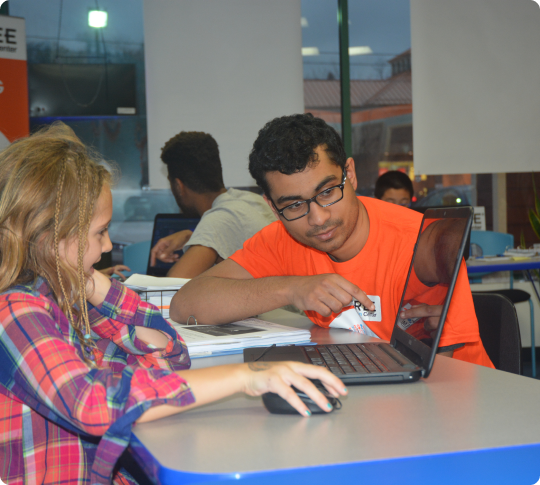
From a parent’s perspective, the practical benefits extend to daily routines. Kids who participate in stem classes in Spring TX often start to approach everyday problems with a more structured, methodical mindset. They map out a plan before tackling a chore, break larger tasks into smaller steps, and use data to support their decisions. They may measure the efficiency of a bike ride, compare the burn rate in a speed reading task, or experiment with a simple kitchen science project to understand how heat affects matter. These aren’t isolated moments; they become lenses through which the world looks a little more legible and a lot more interesting.
The programs span a wide spectrum to accommodate different ages and levels of interest. For younger kids, there are exploration oriented activities that foreground play and discovery without the pressure of formal assessment. As children grow, the curriculum becomes more structured, introducing foundational topics in coding, digital literacy, and engineering. For older students, the options extend into more sophisticated robotics, data analysis, and systems thinking that align with national standards while staying firmly anchored in hands on practice. Throughout, the emphasis remains on making STEM approachable, relevant, and, most importantly, fun.
To truly appreciate why Stemtree resonates in Spring TX, it helps to consider the local ecosystem. The community is peppered with families who value education but who also want the experience to be practical and enjoyable. There is a natural curiosity here about how things work, how a device moves, or how a city manages energy and resources. Stemtree taps into that curiosity and gives it a structure that is both repeatable and scalable. It offers a friendly pathway to higher level understanding without sacrificing the joy that comes from building something tangible.
In this kind of environment, the idea of STEM as a sequence of isolated topics dissolves. Instead, you see a web of interconnections. A lesson on friction is not just about stopping a rolling object; it becomes a gateway into material science, geometry, and even a bit of design thinking. A robotics exercise nudges a student to reflect on sensors, control systems, and user experience. A coding project invites conversations about how to communicate information clearly, how to test assumptions, and how to iterate toward a better product. The cross pollination is where the real value shines, because it mirrors how work happens in the real world where disciplines overlap and solutions require a hybrid mindset.
The leadership at Stemtree also understands the importance of community partnerships. Collaboration with local schools, libraries, and community organizations can extend the impact well beyond the classroom walls. For families, this means more opportunities to see STEM concepts in action in varied contexts: a campus science night, a library maker event, or a neighborhood hackathon where students present their projects to a friendly audience. These experiences reinforce the idea that STEM is not an isolated pursuit but a shared culture you contribute to, whether as a student, a parent, or a citizen.
For parents weighing whether a program like Stemtree is the right fit, there are practical steps to take that can illuminate fit and value. Start with a plain spoken visit during a typical class session. Observe how the room sounds as projects unfold: the hum of collaboration, the murmur of problem solving, the occasional triumphant cheer when a stubborn issue finally resolves. Note how instructors engage students. Do they listen first, then prompt with thoughtful questions? Do they offer just enough challenge to keep momentum without tipping into frustration? These micro moments reveal how a program treats curiosity and how it nurtures a growth mindset over the course of a term.
If you are curious about how a student might experience a specific topic, ask about a representative project. For example, how would a stem class approach a lesson on energy transfer, or how would a coding module guide a learner from block based commands to more textual syntax? The answers you receive will illuminate the level of scaffolding, the pace, and the kind of feedback that is typical in the classroom. A good program will describe not only the stem camps spring texas final outcome but also the learning journey—the missteps, the pivots, and the moments of personal realization that often become the most memorable parts of a young learner’s education.
Space constraints and scheduling realities are another factor families sometimes worry about. Stemtree understands that after school hours fill quickly with sports, music lessons, and a kaleidoscope of other commitments. They typically offer flexible scheduling options, including after school slots, weekend sessions, and camps during school breaks. The goal is to create a structure that fits a family’s calendar rather than forcing families to reorganize life around a rigid timetable. When a program is responsive in this way, it reduces friction and increases the likelihood that kids will engage consistently, which is essential for building proficiency and confidence over time.
The broader question of cost is never far from a parent’s mind either. Quality programs like Stemtree are investments in a child’s future, but communities differ on what makes sense financially. When weighing value, consider not only the price of a course but the total package: the quality of instruction, the breadth of topics offered, the availability of make up sessions, and the way progress is tracked. Some families find that the benefits compound over a few months as a child’s ability to think in structured, testable ways grows more evident in daily life and academic work. Others test a shorter commitment first to gauge alignment with their child’s temperament and curiosity.
To help families navigate this decision, here are two quick reflections to keep in mind. First, STEM is not a single destination; it is a habit that yields returns across multiple dimensions of a child’s life. Second, the right program changes with the child. What fits a pioneering first grader may feel stale to a teen, while a curious middle schooler might crave more ambitious challenges. The beauty of a strong program like Stemtree is its adaptability, its willingness to calibrate to individual needs, and its capacity to celebrate effort and creativity in equal measure.
The Spring TX location has learned that success in STEM education comes from a mix of structure and spontaneity. There is a curriculum, yes, with clear objectives and measurable progress. Yet there is also room for serendipity: a student’s improvised experiment that leads the class to a new line of inquiry, a mentor’s spontaneous demonstration that suddenly clicks with a student, a hallway conversation that connects a science topic to a local issue like water conservation or energy efficiency. These moments matter because they transform learning from a discrete activity into a living, breathing practice.
As families consider the long arc of a child’s education, it is useful to think about not just what is learned, but how it is learned. The value of Stemtree lies in its ability to cultivate a professional stance toward knowledge. It teaches students to ask questions, to design experiments, to document observations, and to reflect on outcomes with honesty. It teaches the difference between data and noise, between a hypothesis that survives scrutiny and one that crumbles under pressure. It teaches resilience the same way a coach teaches a team to keep moving forward even after a setback.
In the end, Stemtree of Spring TX becomes more than a destination for after school enrichment. It is a community where families grow alongside their children, where curiosity is a shared language, and where the day to day act of making something work becomes a small, repeatable triumph. It is a place that makes STEM feel reachable, relevant, and, most importantly, fun. For a city like Spring, where the future is unfolding in real time, that is exactly the kind of nurturing environment that can turn interest into competence and competence into opportunity.
Two small but meaningful advantages often surface for families who commit to the program long enough to experience them. First, students build a robust repertoire of problem solving strategies. They begin to rely less on rote procedures and more on a cognitive toolkit that includes hypothesis formation, data collection, and iterative testing. Second, the social capital of a STEM minded peer group becomes a recurrent resource. When a student works with others who value careful thinking and respectful debate, they learn to communicate complex ideas clearly, to listen to different viewpoints, and to negotiate design choices effectively. The social and intellectual skills developed in this setting extend beyond science and engineering, shaping how a child approaches school projects, community activities, and even future career conversations.
In a world where technology moves quickly and the job landscape evolves with it, early exposure to hands on STEM education can set a foundation that pays dividends. Stemtree of Spring TX understands this at a granular level. They design activities that are not only age appropriate but also scalable as a child’s abilities grow. A beginner may learn to assemble a simple circuit, a more advanced student may tackle a project that integrates sensors, data logging, and a small scale autonomy concept. The thread that ties these experiences together is a mindset: curiosity is a resource, and effort is a strategy.
If you are a parent or guardian looking for a path that connects curiosity to capability, Stemtree offers a compelling model. The approach respects a child’s pace, honors curiosity, and grounds exploration in practical, real world applications. It is not merely about getting the right answer but about understanding how to ask the right questions. It is about witnessing the moment when a student makes the leap from following instructions to inventing their own method, their own route to a solution, their own sense of intellectual independence.
In the weeks and months that follow you may notice a subtle shift in how your child talks about learning. It becomes less about grades and more about the satisfaction of solving something meaningful. The spark is not a one off reward, but a steady flame that grows as the child gains competence and confidence. In time, that shift can influence what subjects a student chooses to explore, how they approach teamwork, and how they see themselves in relation to the world of science and technology.
For families in Spring TX who want to see this transformation unfold, the invitation is straightforward. Book a tour, observe a session, and listen for the language of inquiry. If you hear students explaining a problem, outlining potential experiments, and then revising their plan based on data, you are seeing the heart of Stemtree in action. That is when you know you are looking at a place where STEM becomes everyday fun, not just a noun in a brochure but a lived experience that shapes how a child thinks, learns, and grows.
Two practical notes to consider as you explore options. First, reliability matters. A program that shows up on time, maintains a clean, safe space, and keeps equipment in good order communicates respect for students and families. Second, feedback matters. Look for a culture where feedback is regular and constructive, where progress is tracked in a way that helps learners and parents understand what came before, what is happening now, and what comes next. When a program delivers on both aspects, it becomes part of a family’s weekly rhythm rather than an interruption to it.
The question of long term impact is always on the horizon. Will a few months of STEM curriculum translate into meaningful improvements in confidence or academic performance? The evidence from spaces like Stemtree in Spring TX suggests that the answer is yes, but with important caveats. Gains are most evident when learning is sustained, when projects present authentic challenges, and when students are encouraged to reflect on what they did and why it mattered. Short bursts of activity can spark interest, but lasting change tends to come from a sustained relationship with a community of practice that sees value in exploration, failure, and revision as essential steps toward mastery.
In closing, or rather in an ongoing, evolving narrative, the story of Stemtree in Spring TX is a story about making the abstract tangible. It is about translating the theory of STEM into the experience of building, testing, and refining. It is about creating a space where kids can be curious aloud, where mistakes are treated as data, and where success is defined by the clarity of a thought process as much as by the outcome of a project. It is about shaping a generation that understands not just how to use tools, but how to think about them with rigor, empathy, and imagination. And it is about a community that welcomes families into a shared journey toward a future where STEM is not a distant field but a living practice woven into daily life.
Two common questions tend to surface during conversations with parents and grandparents alike. How do you sustain momentum over the school year with competing commitments? And how do you measure growth beyond the thrill of a successful project? Momentum comes from a cadence that respects busy schedules while preserving meaningful engagement. Small, consistent steps, weekly check ins, and a rotating roster of projects that align with seasons and community events help maintain continuity. Growth, meanwhile, emerges through a portfolio of work that documents progression—not only in technical ability but in the capacity to articulate ideas, justify decisions with data, and collaborate with peers to reach shared goals.
The answer to both questions often rests in one simple truth: learning that sticks is learning that connects. When students see how a circuit ties to a real life device, or how a data set echoes a weather pattern they observe outside, the relevance becomes almost tangible. The classroom becomes a microcosm of the world, and the child learns to see connections rather than isolated facts. That perspective is what makes Stemtree not just another after school option, but a long term partner in a child’s education.
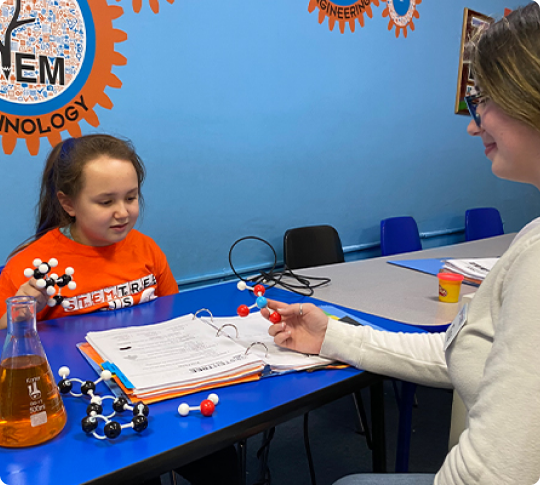
For families in Spring TX who crave a more engaged, practical, and joyful approach to STEM, Stemtree offers a compelling path. It is a space where curiosity is honored, where the process of learning is visible and valued, and where the everyday tasks of a child become the seedbed for future expertise. It is a place where the city’s landscape of science, technology, engineering, and math feels like a shared language you can grow into, one project at a time.
Two brief notes on the broader ecosystem to add nuance. First, the effectiveness of a program like Stemtree often scales with community involvement. When schools, libraries, and local mentors cross pollinate ideas, students benefit from a richer tapestry of experiences and role models. Second, access remains a critical factor. Programs that offer scholarships, sliding scale fees, or free trial sessions lower barriers and invite broader participation. When a community makes STEM accessible to all families, its future becomes brighter and more inclusive.
In this environment, Stemtree of Spring TX stands as a beacon for what after school education can be when done with care, intelligence, and heart. It is not a silver bullet that solves every challenge, but a thoughtful, well crafted pathway that helps students become confident problem solvers who also know how to work with others. The result is a generation that views discovery as a collaborative adventure rather than a solitary task, a generation that understands that science and engineering thrive on questions, courage, and creativity.
If you are curious to see this in action, consider visiting Stemtree’s Spring TX campus, where you may watch a class unfold and glimpse how a curious mind turns a question into a plan, a plan into a prototype, and a prototype into a story worth sharing. The experience tends to leave a lasting impression, one that lingers in conversations about school projects, weekend makerspaces, and the kind of thinking that makes a difference long after the project is complete. In Spring, that difference begins with a simple doorway and a family willingness to explore what STEM can become when it is embedded in daily life.